If you can't beat 'em, lean in and teach them
Struggling to get students to pull meaningful evidence or analyze language deeply? Discover how using AI outputs as a flawed "mirror" can become the perfect low-stakes entry point for rigorous CER commentary and sci-fi synthesis. Complete lesson packet and mastery-based rubric included.
Apologies that I've been a bit quieter and slower with updates over the last couple of months. My day to day changed drastically in February as I took over a long term sub position, but now I have a somewhat clearer view of what my summer and upcoming 2026-2027 school year will look like. More on that at the bottom of this update, but the reason I'm popping on here tonight is because I want to share a project that I'm seeing great results with.
The AI Field Report Project ~ Language Analysis & CER Practice
By this point in the year, I'm guessing you're in finals review or already in the midst of final projects, so you might want to pin this one for next year.
But on the off chance that you've read any dystopian/sci-fi short stories this year, or you're just looking for a structured "AI Analysis Project" that will force your students to use and analyze AI outputs that could be relevant to them for about a week, I thought I would share.
This project asks students to ask an AI bot like ChatGPT, Gemini, or Claude to produce something based on a given prompt, to digitally annotate that prompt, and then take notes and conduct an analysis by hand.
I have students:
- Ask the AI bot to produce an essay based on a prompt (you can revise the one I've provided)
- Ask the AI bot for advice on a common student / teen challenge and engage with it 3 times
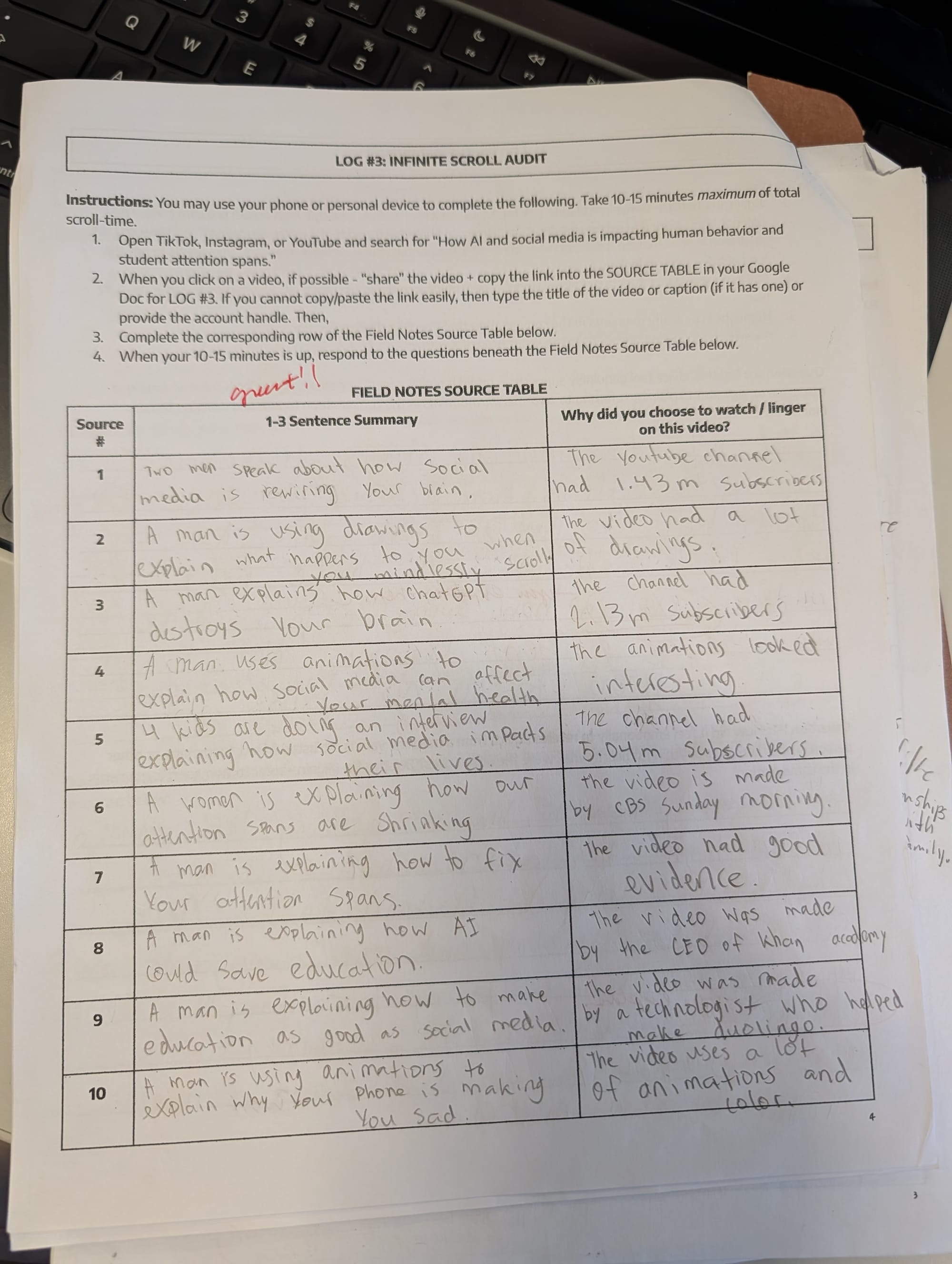
- Do a continuous scroll analysis by using TikTok, YouTube, Instagram, or their social media of choice to do research on how AI and social media is impact teens while logging their sources and explaining why they chose them
Students digitally annotate the first two prompts and then analyze those pieces by hand in their project packet.
After working through all of their research, students then synthesize their research and make connections with a dystopian/sci-fi story of their choice that we read (Naomi Alderman's "God's Doorbell" - found in A Cage Went in Search of a Bird, or Ted Chiang's "Understand" published in Stories of Your Life and Others).
"God's Doorbell" was ~20 pages, while "Understand" was upwards of 40 pages. I was also considering using Ray Bradbury's "The Veldt" (available here), but I didn't have time to pull that one together – however, I think its parallels with social media and virtual reality will be recognizable for students.
Some quick thoughts on these stories:
- "God's Doorbell" language was more accessible for students, and parallels with the Tower of Babel worked readily for some students. I think the students found the story somewhat odd, but connecting the story with Wall-E further helped their understanding.
- "Understand" was super long and the language is quite dense. Most students read the story and had a general sense of what was going on (I had them do independent reading notes, since getting students to read has been like pulling teeth this year) - I can share my packet if you're interested - if you'd like to see it sooner than later, comment on this post or email me hollywoodandlit@gmail.com. Students that liked this story REALLY liked it. The protagonist/narrator's POV and development also stretches to include disciplines beyond the sciences. Ultimately, I asked students to list the social media they know of / use, and then branched that discussion into asking them if they understand how generative AI works and connected the "language learning model" with how Leon, the narrator of "Understand," has a relentless pursuit of language and intelligence.
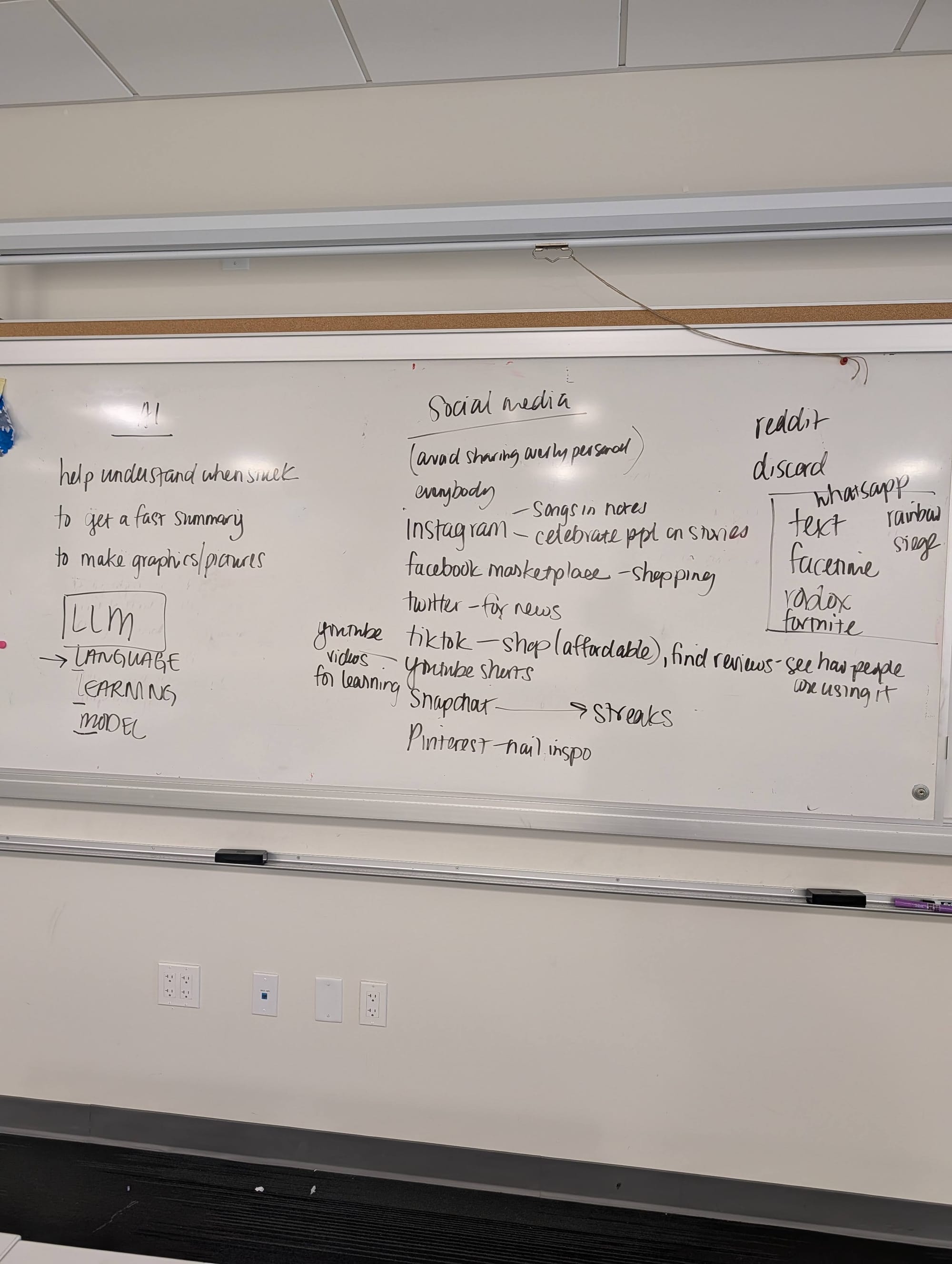
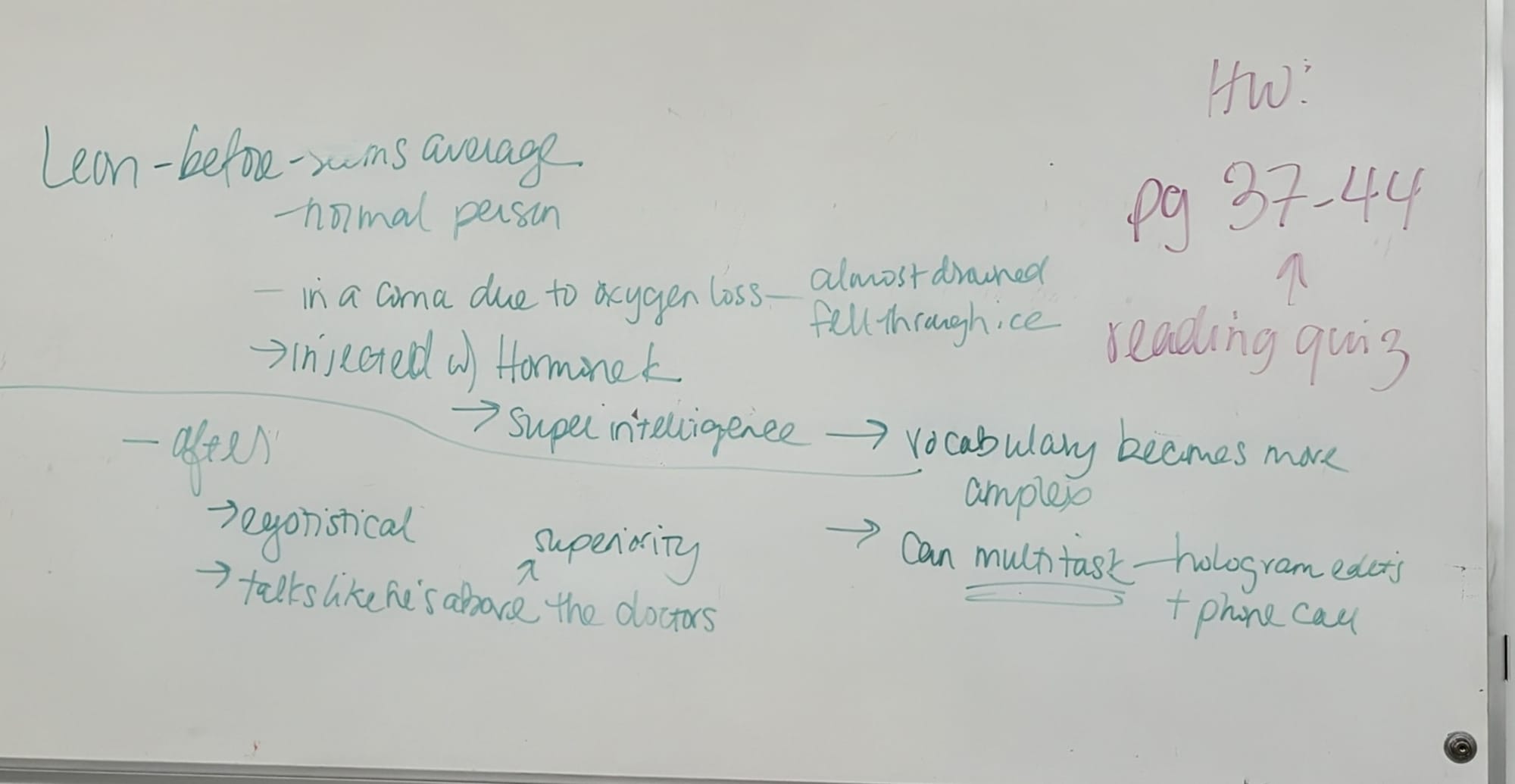
First image is from our early discussion of AI & Social Media, second image is from our discussion of Leon (narrator of "Understand" by Ted Chiang)
Meaningful CER / Commentary / Analysis Results
I pulled this project together as a way for my non-honors students to engage with our readings, to practice synthesis, and also produce a unit assessment that felt doable and accessible. I was expecting most student work to be half-finished with lackluster engagement, but I have been very pleasantly surprised with student work.
For many students, I'm seeing detailed explanations and "picking apart of language," that I haven't been able to get them to produce, even after modeling it multiple times with Long Way Down or BJ Novak's short stories. Perhaps asking them to analyze a made up essay and explain how it is or is not a genuine representation of something that they would write makes it easier for them to explain what feels off to them versus explaining what's off about something more directly academic or about a book.
I've been really impressed with the synthesis and connections that students are making between their research and the short stories.
Further, I'm heartened to see how many students are thinking critically of what they see on social media. And for those students that aren't thinking critically, I am able to see what they're consuming and where they're at.
Meanwhile, I'm also very happy with the project rubric. I'm now in a Mastery Based Grading school, and the rubric has been descriptive and helpful for students to know what I'm looking for while also ensuring that this project is rooted in the standards (Claims, Evidence, Reasoning, Analysis, Organization).
Anyways, I hope you find this project helpful! (Access at the bottom of this post when logged in).
A quick Personal Classroom Update
I'm quite happy to share that I will be teaching 9th grade English this coming fall, and most likely a Film Studies seminar/elective, too! I began my teaching career training under a master mentor teacher in 9th grade English, so it feels like coming home as a re-entry to the classroom to be teaching 9th grade again.
The student population and demographics are a bit different from what I'm used to given that I've relocated from Massachusetts where I previously taught to California. One of the marked differences is in the skill gap that I see. I always taught multiple levels in one classroom where students were tracked, but I think this year I've seen students "more gifted" or at a higher performance level of Honors than I'm used to working with in the past in 9th grade, while also seeing a larger percentage of each class with the lowest reading comprehension and writing abilities that I've worked with in the gen ed classroom.
This has me down a rabbit hole of reading intervention and literacy, since I had to pivot this semester as I realized I just needed to guide students and model close reading and analysis.
So over the summer, I'll be preparing for next year while evaluating the experiments I leaned into over the last month in order to prepare myself for next year (I taught Animal Farm alongside Zootopia 2, Wendell & Wild alongside Long Way Down, tried out these dystopian short stories, and revisited my BJ Novak short stories & analytical writing introduction unit).
I'm keen to consider teaching The Marrow Thieves next year, as well as structuring some Odyssey lessons and materials that compare Fitzgerald's version with Wilson's for Honors students, especially with the opportunity to compare with Nolan's upcoming film adaptation.
This dystopian short stories unit also has me thoughtful of Karen Hao's Empire of AI (which I'm currently halfway through), as well as Sarah Wynn-Williams' Careless People (which I highly recommend listening to, if you have the chance - it's thrilling). Expect a text set that begins the unit that may lead into this AI Field Report Project for the future.
Anyways, if you're still with me at this point in the post - thank you! Find the AI Field Report Project below when you're logged in, listed in the Planning Room Library, and I'll create a resource listing for it on hollywoodandlit.com soon.
Written by Cara, HS English & Film teacher
Get classroom-tested film and literature lesson ideas in your inbox.
brb, teaching English 9 and Film Studies Seminar